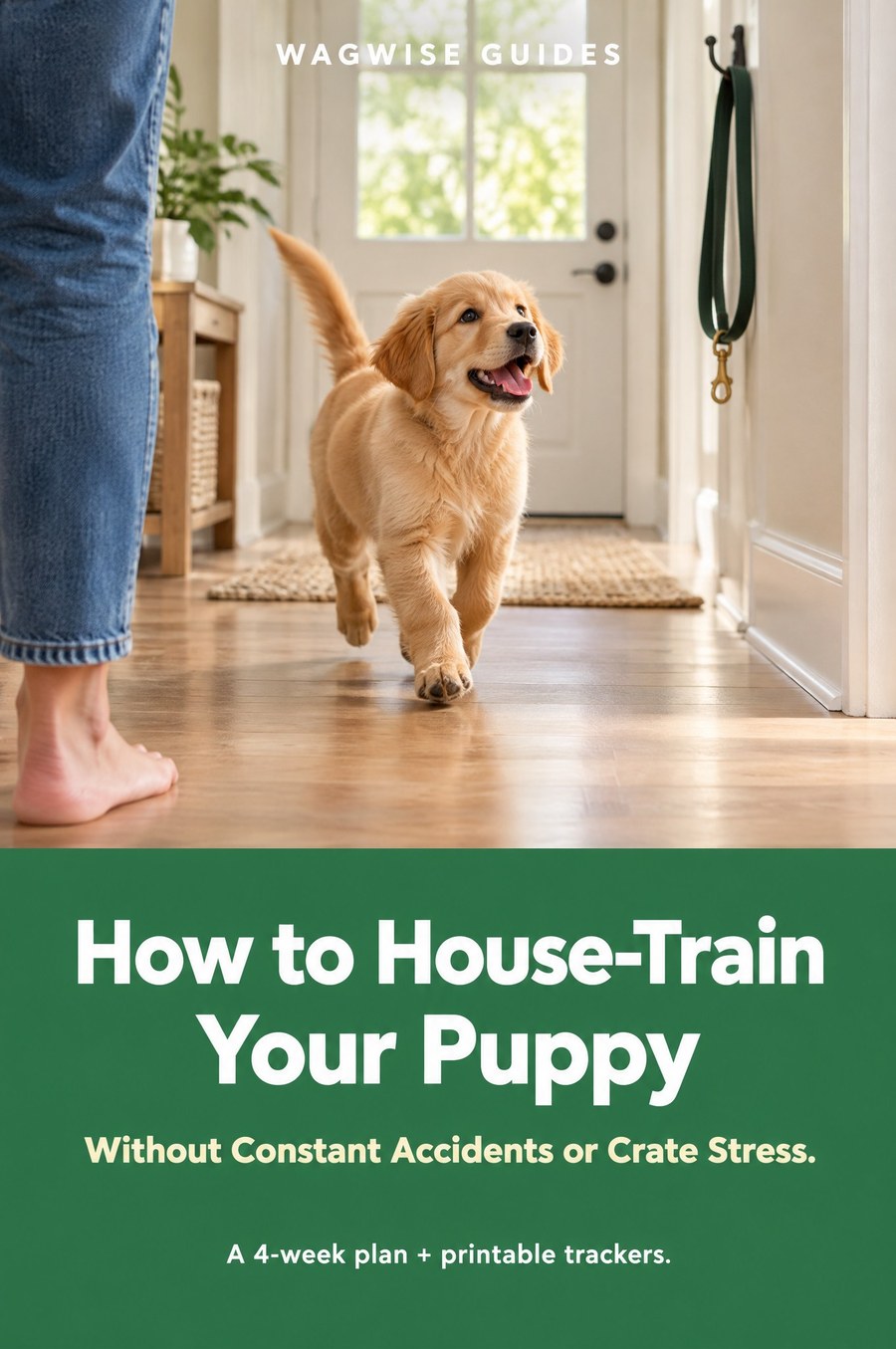
House-training
Potty Cues and the Potty Trip Routine
Quick answer
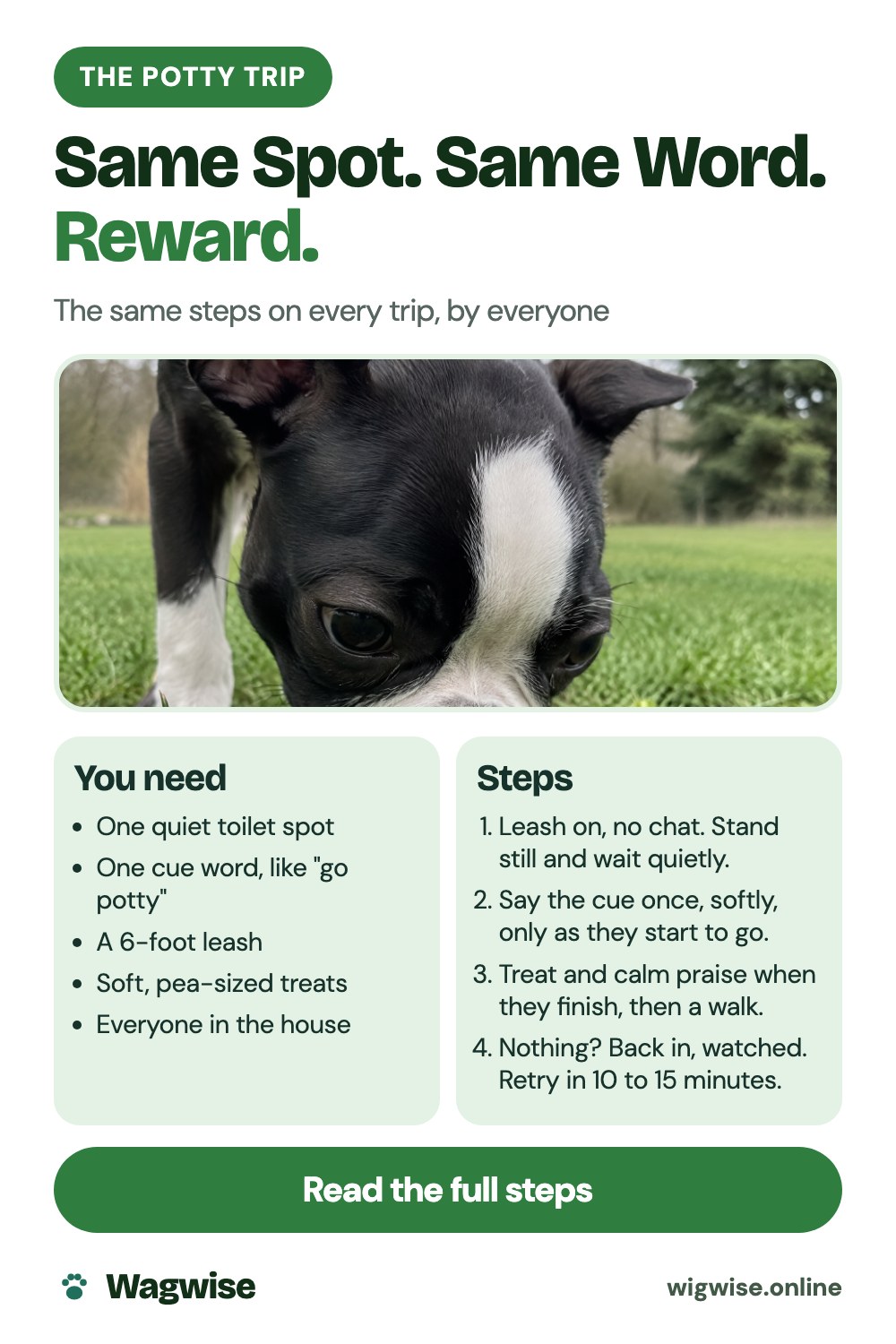
A puppy potty cue is a word you say once, softly, only while your puppy is actually going. Pair it with a six-step trip: leash on, stand still, say the cue as they start, reward when they finish, then walk or play. Keep it the same, every time, with everyone.
- Use the same six steps on every trip, and have everyone in the house do them.
- For the first week or two, say the cue only while your puppy is actually going.
- Reward after your puppy finishes, at the spot, within a few seconds.
- Make the walk or play the second reward, so going does not end the fun.
A puppy potty cue is a short word you attach to the act of going. It works best when the trip around it is the same every time, by every person. Be quiet while your puppy goes, and reward the moment they finish.
What are the six steps of a potty trip?
- Leash on, no chat. Walk, or carry a small puppy, straight to the spot.
- Stand still and wait. Stay quiet. Give them a few minutes.
- Say the cue once, softly. Only as they start to go.
- Reward when they finish. Treat and calm praise within seconds.
- Then the second reward. A short walk or play, so going does not end the fun.
- Nothing happened? Back in, eyes-on or in the pen. Try again in 10 to 15 minutes.
That last timing is our suggestion.
When should I say the potty cue?
For the first week or two, say the cue only while your puppy is actually going. That teaches the word to match the act. Later you can move it a moment earlier. Praise too early and a distracted puppy may stop halfway, so hold the praise until they finish.
Keep the cue calm and soft. It is a label, not a command to hurry.
What goes into the setup?
| Part | What to choose |
|---|---|
| One spot | Quiet, away from where your puppy eats and sleeps |
| One cue word | Any short word, such as “go potty” |
| One door | The same door in and out every time |
| One log | Everyone writes in it |
If one person changes the word or the door, the puppy hears mixed messages. Agree these as a household. Children can help with the cue word and treats, but not with taking a puppy out alone.
What about the reward?
Keep the best soft treats for potty trips only. That is our suggestion, so the reward means “that was the right place.” A pea-sized treat works. Then give the second reward: a short walk or play. If a walk comes first, it can bury the lesson, which is the same trap in why your puppy pees right after a walk.
Take your puppy out without other pets for now, so play does not compete with the job. For poop, give a slower, longer visit and use a better treat.
Can my puppy learn to tell me?
Maybe, but do not count on it. Penn Vet notes that “not all dogs learn automatically to signal the need to eliminate, in a way that their owners understand.” Use the same door every time, and some owners add a bell or bark-at-the-door cue once the routine is stable. Keep the schedule even if a signal appears. Learn your puppy’s own signs they need to go and note them in the log.
What if my puppy will not go?
Go back in watched and try again in 10 to 15 minutes. If it keeps happening, run through the 7 checks when a puppy won’t pee outside. Straining, crying or blood while going is never a training problem, so call your vet. The House-Train Your Puppy guide includes a fridge card with the six steps.
Frequently asked questions
When should I say the potty cue word?
For the first week or two, say it only while your puppy is actually going. Later you can move it a moment earlier.
What should the cue word be?
Any short word that everyone will use, such as 'go potty'. The important part is that the whole household uses the same one.
When do I give the treat?
After your puppy finishes, at the spot, within a few seconds. Praise too early and a distracted puppy may stop halfway.
Should I use the cue to make my puppy go?
Not at first. The cue is something your puppy learns to link to the act. Use it only as they start to go.
Do I need a bell on the door?
Not at the start. Some owners add a bell or bark-at-the-door cue once the routine is stable, but keep the schedule.
More Wagwise guides for dog owners
 Stop Puppy BitingA gentle 4-week plan to stop the nipping and get through teething.$17 · instant PDFSee the guide →
 Get Rid of Dog Pee SmellRemove urine odor for good, then stop the accidents with a 14-day reset.$17 · instant PDFSee the guide →
 Stop Dog BarkingA quiz finds why your dog barks, then a plan made for that reason.$17 · instant PDFSee the guide →
 Help Your Itchy DogTrack triggers, soothe skin safely and know when to see the vet.$17 · instant PDFSee the guide →
 Stop Leash PullingA 4-week force-free plan for calmer walks and a loose leash.$17 · instant PDFSee the guide →
 Leave Your Dog AloneFilm, sort and build calm alone time with a vet-first plan and a step-by-step ladder.$17 · instant PDFSee the guide →
 Puppy Sleeps Through the NightA realistic, age-by-age plan for calmer nights, without cry-it-out or crate fights.$17 · instant PDFSee the guide →
 Less Dog Hair, Less SmellA 4-week brushing, bath and home routine for a calmer-smelling house.$17 · instant PDFSee the guide →
Want all four? Get the complete library for $49.
Sources
This article is general education, not veterinary advice. It does not replace an examination by your vet or help from a qualified behaviourist.