
Puppy sleep
When Puppy Crying Isn't Normal
Quick answer
When to worry about puppy crying: most night crying is normal, but vomiting, diarrhea, very low energy, breathing trouble, panic or crying that is not improving are not. Call your vet first. They can check for illness and refer you to a qualified behavior professional if needed.
- Most night crying is normal. Some signs are not, and your vet is the first call.
- Red signs need a vet now. Amber signs need a vet check soon. Panic means stop crate work and call your vet.
- Dogs Trust, Battersea and RSPCA UK all point to the same order: vet first, then an accredited behaviorist.
- Choose force-free, reward-based help, and avoid shock, spray, prong or choke tools.
Knowing when to worry about puppy crying makes it easier to relax about the rest. Most night crying is normal. Certain signs are not, and when you see them, your vet is the first call.
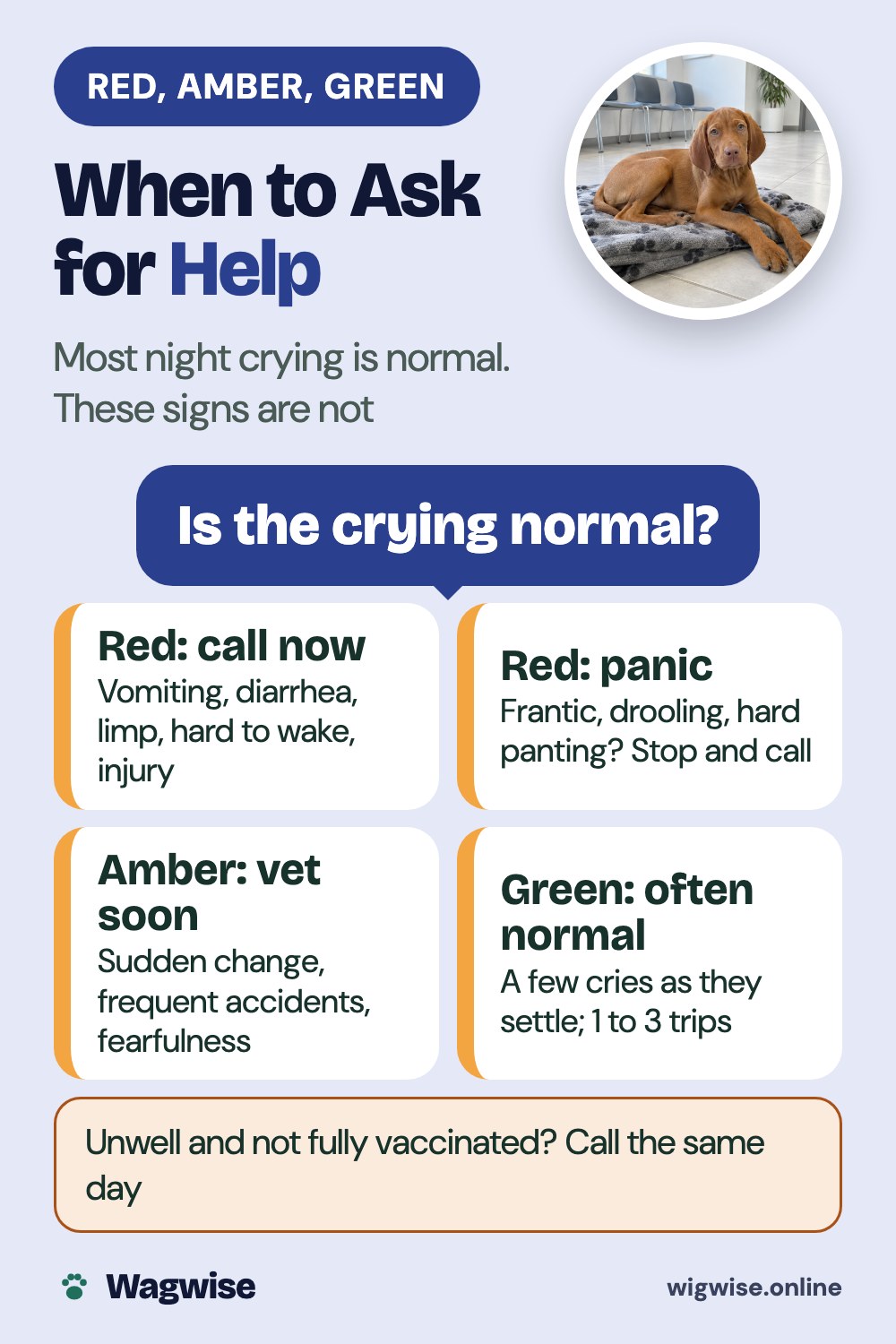
When to worry about puppy crying: red, amber and green
| Level | What you see | What to do |
|---|---|---|
| Red | Vomiting, diarrhea (especially both, or with blood), a swollen belly, very low energy, limp or hard to wake, refusing food, trouble breathing, collapse or any injury | Call your vet now, or an emergency clinic |
| Red: panic | Long, frantic crying, drooling or hard panting, trying to escape or scrabbling, toileting in the crate again and again | Stop crate work and call your vet |
| Amber | Frequent urination or repeated accidents beyond the age chart, a sudden change in a settled puppy, new general fearfulness, crying that is not improving after the first few weeks | Book a vet check soon |
| Green | A few cries or grumbles as they settle, 1 to 3 toilet trips at 8 to 10 weeks, bedtime whining that eases when you stay close | Usually normal |
An unvaccinated or part-vaccinated puppy who is unwell needs a call the same day, because puppies can get seriously ill quickly.
What about frequent toilet trips?
Frequent urination, or repeated accidents when your puppy should be able to hold it, deserve a vet check for problems such as a urinary tract infection. Ask your vet what is normal for your puppy’s age and size.
What about panic in the crate?
The AKC says that if a puppy seems panicked or will not stop crying, stop crate training immediately and get professional help. A crate does not treat separation anxiety. For persistent distress, Dogs Trust, Battersea and RSPCA UK all point to the same order: see your vet first to rule out illness or pain, then ask for a referral to an accredited behaviorist.
What should I bring to the vet?
- Your night log
- A short video of the crying, filmed from the side if you can
- Vaccine records and your puppy’s age
- What and when your puppy eats
- Notes on what you have tried
It also helps to note what you have seen: low energy, hard panting or drooling, frantic escape attempts, toileting in the crate, a sudden change after weeks of settling.
How do I choose a trainer or behaviorist?
Choose someone who uses force-free, reward-based methods. Avoid anyone who recommends shock, spray, prong or choke tools, or who talks about being the “alpha.” Credentials differ by country, so ask about their training and methods, and verify them.
What counts as normal, so I can relax?
Normal night crying includes a few cries or grumbles as your puppy settles, especially in the first nights. It includes one to three toilet trips at 8 to 10 weeks, fewer as they grow, and bedtime whining that eases when you stay close. Your puppy has just left their mom and littermates, and a small bladder adds wake-ups. None of that is a problem.
If you are unsure which box your puppy fits, take a short video of the crying from a distance, write down the time and what helped, and call your vet. Calling early is better than waiting, and a vet would always rather hear from you.
Is a difficult puppy to blame?
No. Persistent distress is a message, not a character flaw. It tells you to step back and ask for help. If your puppy was settled and then got worse, read Puppy Was Fine, Now Crying More. For the normal reasons behind night crying, see Why Puppies Cry at Night.
Frequently asked questions
Is it normal for a puppy to cry at night?
Some crying in the first nights is normal, as are a few grumbles as they settle, and 1 to 3 toilet trips at 8 to 10 weeks. The signs below are not.
What should I bring to the vet?
Your night log, a short video of the crying filmed from the side if you can, vaccine records and your puppy's age, what and when your puppy eats, and notes on what you have tried.
Could my puppy have separation anxiety?
If crying or distress continues, it may be. Dogs Trust recommends an accredited behaviorist through a vet referral. A crate does not treat separation anxiety.
Who should I choose to help?
Choose someone who uses force-free, reward-based methods. Avoid anyone who recommends shock, spray, prong or choke tools, or talks about being the alpha. Credentials differ by country, so ask and verify.
More Wagwise guides for dog owners
 Stop Puppy BitingA gentle 4-week plan to stop the nipping and get through teething.$17 · instant PDFSee the guide →
 Get Rid of Dog Pee SmellRemove urine odor for good, then stop the accidents with a 14-day reset.$17 · instant PDFSee the guide →
 Stop Dog BarkingA quiz finds why your dog barks, then a plan made for that reason.$17 · instant PDFSee the guide →
 Help Your Itchy DogTrack triggers, soothe skin safely and know when to see the vet.$17 · instant PDFSee the guide →
 House-Train Your PuppyA kind 4-week plan with a schedule by age, a night plan and printable trackers.$17 · instant PDFSee the guide →
 Stop Leash PullingA 4-week force-free plan for calmer walks and a loose leash.$17 · instant PDFSee the guide →
 Leave Your Dog AloneFilm, sort and build calm alone time with a vet-first plan and a step-by-step ladder.$17 · instant PDFSee the guide →
 Less Dog Hair, Less SmellA 4-week brushing, bath and home routine for a calmer-smelling house.$17 · instant PDFSee the guide →
Want all four? Get the complete library for $49.
Sources
This article is general education, not veterinary advice. It does not replace an examination by your vet or help from a qualified behaviourist.