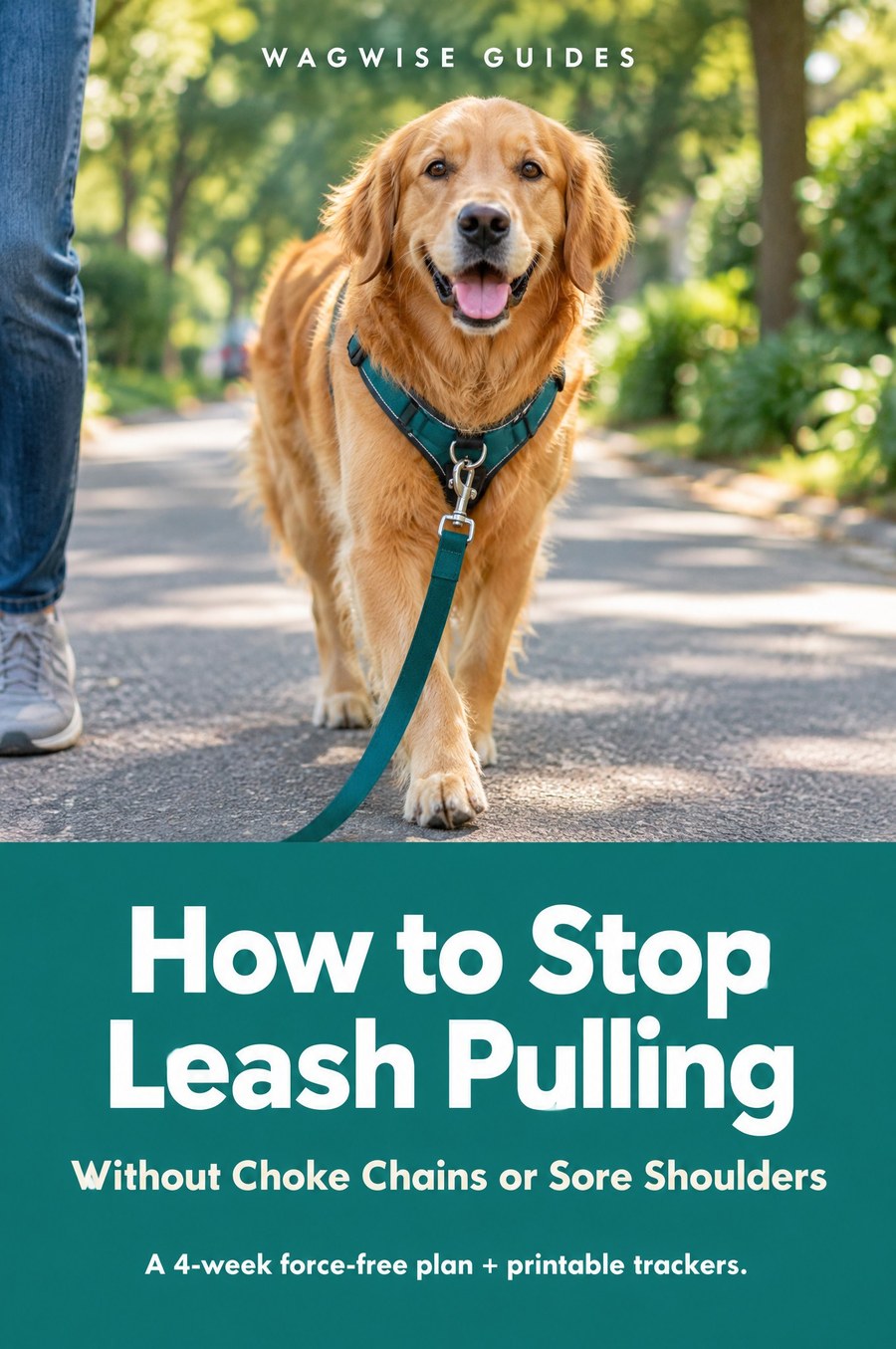
Leash pulling
Your First Walk Tonight: Quick Start
Quick answer
Here is how to stop a dog pulling on the leash tonight: check the gear, use a normal 5 to 6 foot leash, load about 20 soft treats, pick a boring place and stop whenever the leash tightens. Pay your dog when the leash goes slack. You aren't fixing everything tonight, only stopping the habit from getting worse.
- Tonight's goal is small: stop making the pulling worse, not fix it all.
- A tight leash means stop. Reward a slack leash or a look back, then walk on.
- Five minutes in a boring place is plenty.
- Never jerk, scold, drag your dog by the collar or keep walking on a tight leash.
How to stop a dog pulling on the leash starts with one habit: a tight leash means we stop. You don’t need new gear or a big plan for tonight. You only need five minutes, a plain leash and a pocket of treats.
Tonight you’re not trying to fix the whole problem. You’re only trying to stop making it worse.
The 6-step walk for tonight
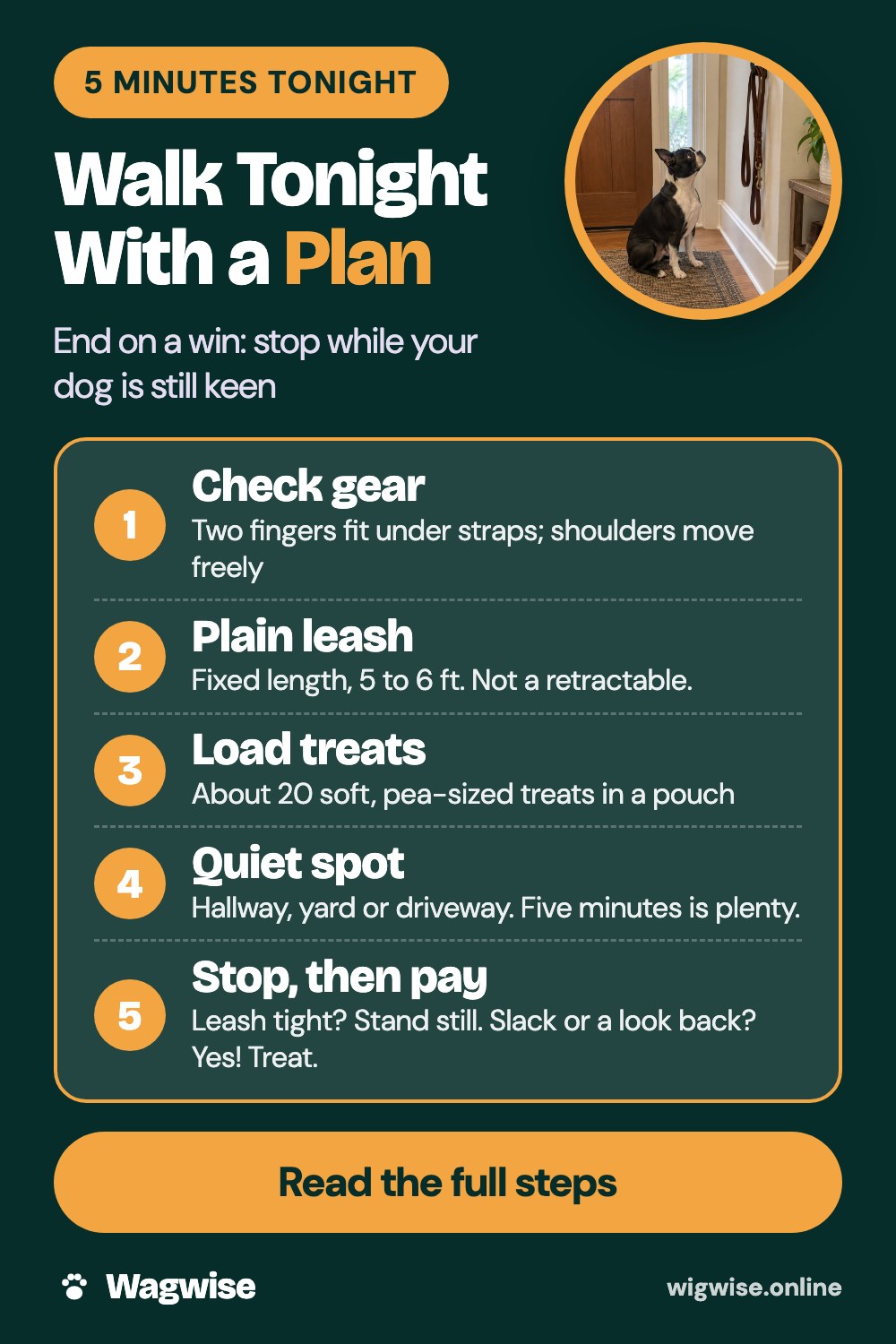
- Check the gear. Your collar or harness should be snug but with room for two fingers underneath, nothing rubbing, and free movement of the shoulders. Not sure? Ask your vet or a reward-based trainer to look.
- Use a normal leash. Fixed length, 5 to 6 feet (1.5 to 1.8 meters). Not a retractable.
- Load about 20 treats. Pea-sized and soft, in a pouch or pocket where you can grab them fast.
- Pick a boring place. A hallway, the backyard or a quiet driveway. Five minutes is plenty.
- Stop when the leash tightens. Stand still, stay quiet and keep your hands low. When the leash goes slack or your dog looks back, say “yes!”, give a treat and walk on.
- End on a win. Stop while your dog is still keen, then give one last treat.
What should I do when my dog pulls on the leash?
Nothing dramatic. Stop, wait, and pay for slack. If your dog doesn’t turn back to you, Dogs Trust suggests walking a couple of steps the other way, then rewarding when your dog catches up beside you.
The reason is the loop we describe in why dogs pull on the leash: taking even one step forward on a tight leash pays the pull.
Don’t, tonight or ever
| Skip this | Why |
|---|---|
| Jerk, pop or yank the leash, or scold your dog | It adds stress and doesn’t teach what to do instead |
| Drag your dog along by the collar | Encourage your dog into position with a voice cue or a treat instead |
| Keep walking while the leash is tight | Every step on a tight leash pays the pull |
Why a boring place and only five minutes?
At first, your dog needs nothing more interesting than you. A hallway, the backyard or a quiet driveway keeps the smells and sights low, so a loose leash is easy to earn. Short sessions also keep your dog keen. If your dog stops taking treats, whines or can’t focus, the place is too hard. Move somewhere quieter, or call it a day and try again tomorrow.
What if I’m in a rush?
Let your dog relieve itself at the curb and come back in. Save the real walk for when you have time to train. AKC notes that allowing pulling, even once, can set training back.
What does a good first walk look like?
It might not look like much. You may stop a dozen times in five minutes and walk only a few yards. That is fine. Count your stops and write the number down. It becomes your baseline, so you can see progress over the next few weeks instead of guessing.
What should I expect?
Expect lots of stops at first. Many stops in week one is normal, and fewer, shorter stops over the following weeks is the sign it is working. A loose leash is a skill your dog learns by being paid for it.
Before you start, answer the questions in our 2-minute check in case pain, a cough or fear is part of the picture. Then take it from the living room to the street with seven foundation games, or follow the full Stop Leash Pulling guide.
Frequently asked questions
Can I really start leash training tonight?
Yes. Tonight is only about not making the pulling worse. You need a normal leash, about 20 soft treats and five minutes in a quiet place.
What do I do the moment the leash goes tight?
Stop, stand still and stay quiet with your hands low. When the leash is slack or your dog looks back, say yes, give a treat and walk on.
What if I'm in a rush tonight?
Let your dog relieve itself at the curb and save the real walk for when you have time to train. Pulling even once can set training back.
Why so many stops at first?
Expect lots of stops in the first week. That is the plan working, not failing.
More Wagwise guides for dog owners
 Stop Puppy BitingA gentle 4-week plan to stop the nipping and get through teething.$17 · instant PDFSee the guide →
 Get Rid of Dog Pee SmellRemove urine odor for good, then stop the accidents with a 14-day reset.$17 · instant PDFSee the guide →
 Stop Dog BarkingA quiz finds why your dog barks, then a plan made for that reason.$17 · instant PDFSee the guide →
 Help Your Itchy DogTrack triggers, soothe skin safely and know when to see the vet.$17 · instant PDFSee the guide →
 House-Train Your PuppyA kind 4-week plan with a schedule by age, a night plan and printable trackers.$17 · instant PDFSee the guide →
 Leave Your Dog AloneFilm, sort and build calm alone time with a vet-first plan and a step-by-step ladder.$17 · instant PDFSee the guide →
 Puppy Sleeps Through the NightA realistic, age-by-age plan for calmer nights, without cry-it-out or crate fights.$17 · instant PDFSee the guide →
 Less Dog Hair, Less SmellA 4-week brushing, bath and home routine for a calmer-smelling house.$17 · instant PDFSee the guide →
Want all four? Get the complete library for $49.
Sources
This article is general education, not veterinary advice. It does not replace an examination by your vet or help from a qualified behaviourist.