House-training
Your Potty Training Kit and Zones
Quick answer
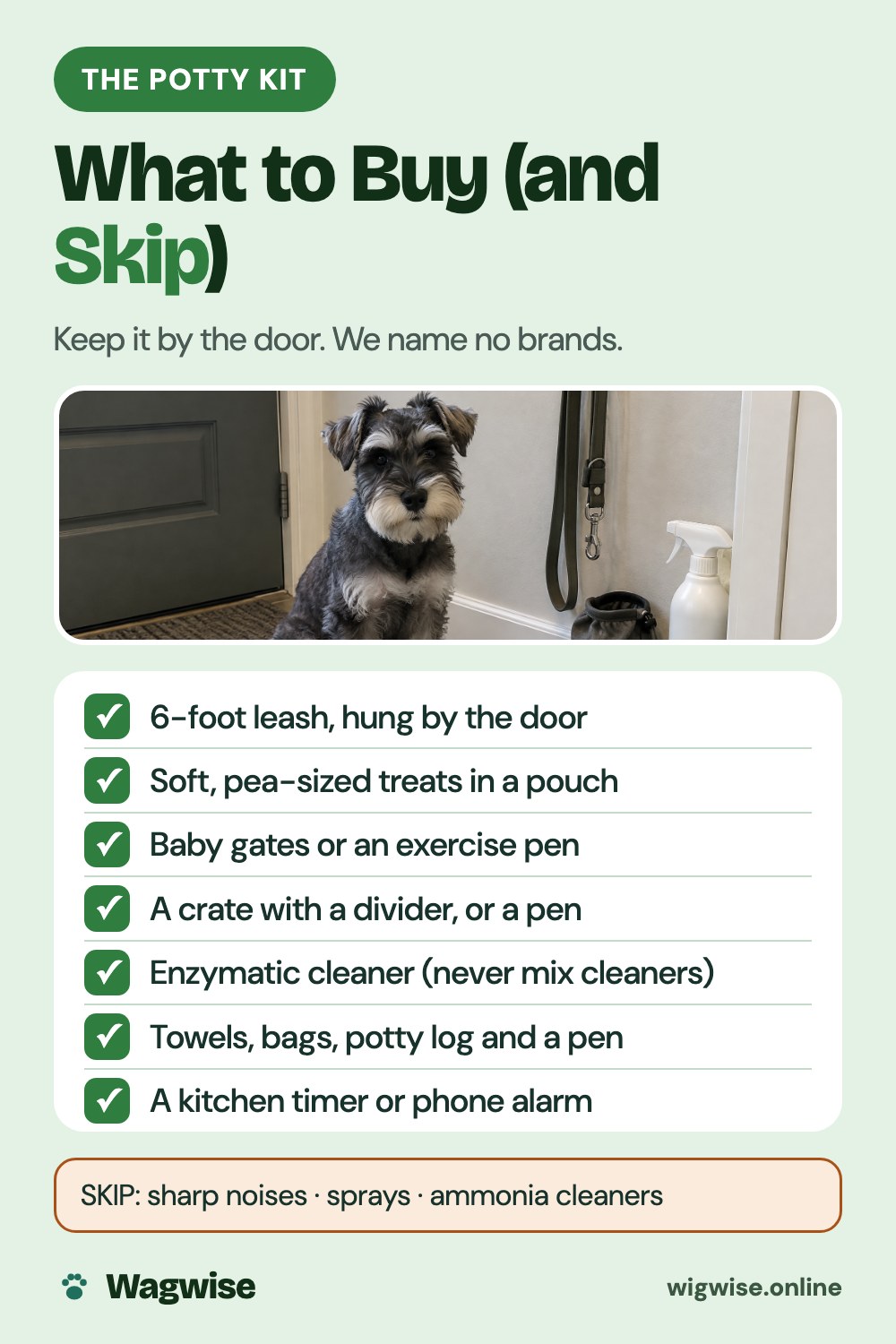
A puppy potty training kit is simple: a 6-foot leash, soft pea-sized treats, baby gates or a pen, a crate with a divider, an enzymatic cleaner, towels and bags, a log with a pen, and a timer. Keep it by the door and give each part of your home one job.
- A routine only works if it is easy to follow at 6 am, so keep the kit by the door.
- Choose one toilet spot, one cue word and one door, and share them with the whole household.
- Four zones give every part of the home a job: pen, crate, family area and toilet spot.
- Skip anything that startles your puppy, and skip ammonia-based cleaners.
A puppy potty training kit does not need to be fancy. It needs to be easy to grab at 6 am, when you are half awake. Put the basics by the door, give each room a job, and the routine becomes much easier to follow.
What goes in the kit?
Keep these by the door or within reach:
- A 6-foot leash, hung by the door
- Soft, pea-sized treats in a pouch
- Baby gates or an exercise pen
- A crate with a divider, or a pen
- An enzymatic cleaner
- Towels and a roll of bags
- The potty log and a pen
- A kitchen timer or phone alarm
We do not recommend any brand, and you do not need to buy everything at once. If you have to choose, start with the leash, treats and cleaner.
What should I skip?
Skip anything that startles or punishes. Sharp noises, clapping, shaker cans and sprays startle rather than teach, and they do not fit a kind, reward-based routine. Skip ammonia-based cleaning products, because the smell may draw your puppy back. Skip pee pad brands unless an indoor spot is truly your only practical option, and then plan the move outdoors from day one.
How do I choose the spot?
Pick a quiet place away from where your puppy eats and sleeps, away from busy areas and distractions, and quick to reach. Go on a leash, to the same spot, every time. Agree these as a household:
- One toilet spot
- One cue word, such as “go potty”
- One door in and out
- Everyone writes in the log
If every person shares them, the puppy hears the same message from everyone.
What are the four zones?
| Zone | What it is for |
|---|---|
| Pen or gated area | A safe space for chews and naps when you cannot watch |
| Crate | Sleep and short, kind absences once it feels like a den |
| Family area | Where play happens, always with an adult watching |
| Toilet spot | Outside, on a leash, always the same place |
A crate or pen is a calm corner, never a punishment. For how to introduce it, see crate training for potty.
A crate should be big enough for your puppy to stand, turn around and lie down comfortably. Use a divider so it grows with your puppy, because a crate that is too big lets a puppy soil one end and sleep at the other. A pen should have a bed at one end and a toilet area at the other, with water and a chew inside, and the toilet corner away from them.
What should I do with treats and cleaning?
Keep the best soft treats for potty trips only. That is our suggestion, so the reward means “that was the right place.” Reward after your puppy finishes, within a few seconds.
When an accident happens, clean thoroughly with an enzymatic or odor-neutralizing cleaner, so the smell does not draw your puppy back. For the first ten minutes, our free Fresh Accident Kit gives you a fridge card. Never mix cleaning products with each other, and never use bleach on pee.
Where do I go from here?
Do three things today: choose the toilet spot and stand in it once, hang the leash and treat pouch by the door, and agree one cue word. Then follow the plan in your puppy’s first 24 hours, and see the House-Train Your Puppy guide for the full routine. If your puppy suddenly refuses the spot or seems to strain there, call your vet.
Frequently asked questions
What do I need to potty train a puppy?
A 6-foot leash, soft pea-sized treats in a pouch, baby gates or an exercise pen, a crate with a divider or a pen, an enzymatic cleaner, towels and bags, a potty log and pen, and a kitchen timer or phone alarm.
Where should the toilet spot be?
A quiet place away from where your puppy eats and sleeps, away from busy areas and quick to reach. Go on a leash, to the same spot, every time.
Why save the best treats for potty trips?
The reward should mean 'that was the right place'. Keeping the best soft treats for potty trips only is our suggestion.
What cleaner should I use?
An enzymatic or odor-neutralizing cleaner, so the smell does not draw your puppy back. RSPCA Australia advises non-ammonia products.
More Wagwise guides for dog owners
 Stop Puppy BitingA gentle 4-week plan to stop the nipping and get through teething.$17 · instant PDFSee the guide →
 Get Rid of Dog Pee SmellRemove urine odor for good, then stop the accidents with a 14-day reset.$17 · instant PDFSee the guide →
 Stop Dog BarkingA quiz finds why your dog barks, then a plan made for that reason.$17 · instant PDFSee the guide →
 Help Your Itchy DogTrack triggers, soothe skin safely and know when to see the vet.$17 · instant PDFSee the guide →
 Stop Leash PullingA 4-week force-free plan for calmer walks and a loose leash.$17 · instant PDFSee the guide →
 Leave Your Dog AloneFilm, sort and build calm alone time with a vet-first plan and a step-by-step ladder.$17 · instant PDFSee the guide →
 Puppy Sleeps Through the NightA realistic, age-by-age plan for calmer nights, without cry-it-out or crate fights.$17 · instant PDFSee the guide →
 Less Dog Hair, Less SmellA 4-week brushing, bath and home routine for a calmer-smelling house.$17 · instant PDFSee the guide →
Want all four? Get the complete library for $49.
Sources
This article is general education, not veterinary advice. It does not replace an examination by your vet or help from a qualified behaviourist.