Leash pulling
Puppy Pulling on the Leash: What's Normal
Quick answer
Puppy pulling on the leash is normal: dogs naturally walk faster than people, and young dogs find self-control hard. Start teaching when you bring your puppy home, indoors and in the yard, with short, light, positive sessions. For outdoor walks before full vaccination, follow your vet.
- Pulling is natural, and puppies find self-control especially hard.
- Start when you bring your puppy home, indoors and in the yard. For outdoor walks before full vaccination, follow your vet.
- Teach a marker word, reward eye contact and check-ins, and play the leash-end lookback.
- Keep sessions short (we suggest 2 to 5 minutes), resize the harness as your puppy grows and never drag a puppy who stops.
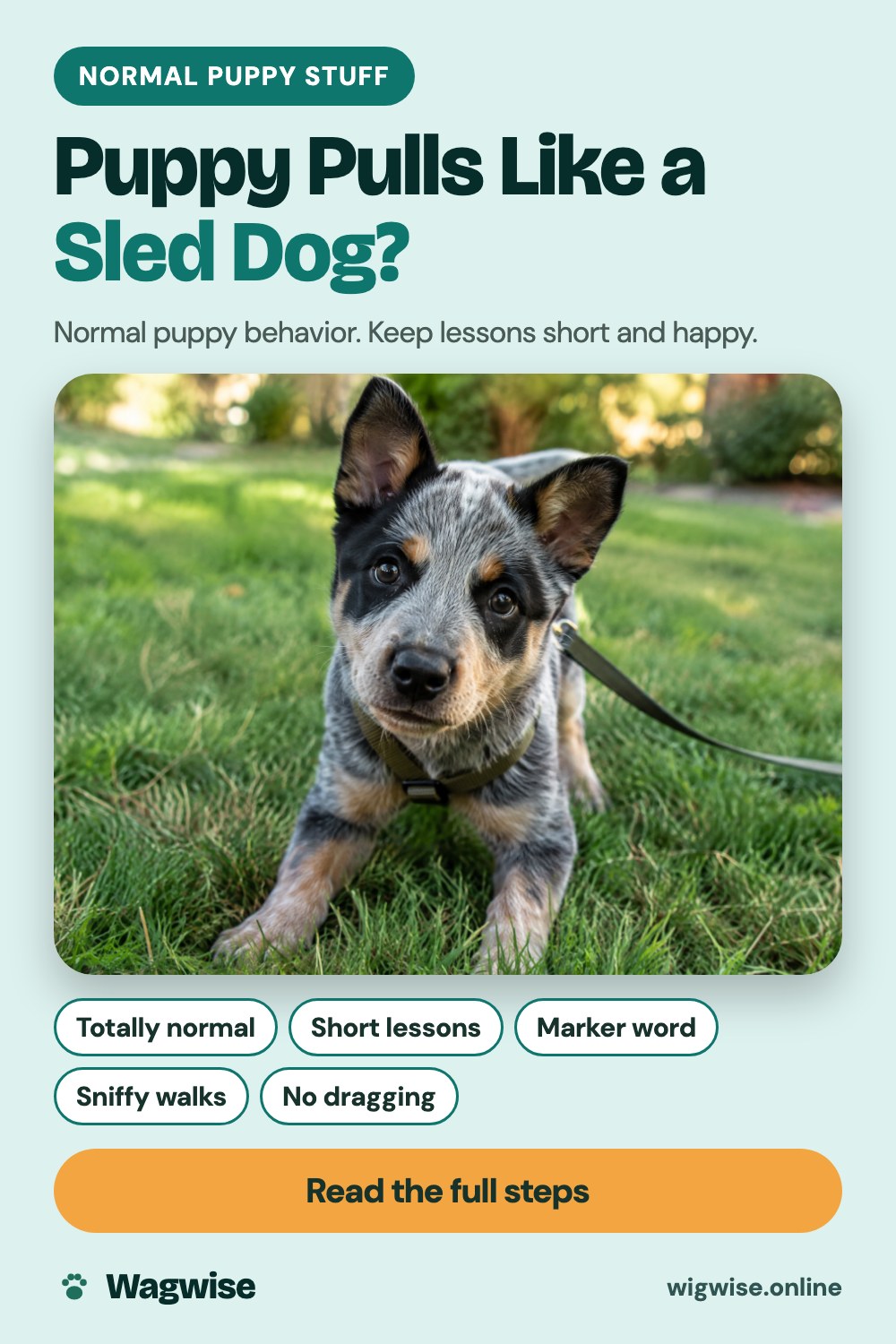
Puppy pulling on the leash is normal. Dogs naturally walk faster than people, and young dogs find self-control hard, so a puppy leaning into the leash like a tiny sled dog is doing what puppies do. The good news is that it is much easier to teach loose-leash walking early, with short and happy lessons.
When should I start leash training a puppy?
Start when you bring your puppy home, even before full vaccination, indoors and in the yard. AKC says training can start before then. For outdoor walks before full vaccination, follow your vet’s advice.
How do I teach a puppy to walk on a leash?
Keep it light and positive. Try these four building blocks:
- Teach a marker word. A happy “yes!” followed straight away by a treat.
- Reward eye contact and check-ins. Say your puppy’s name once and pay for every glance.
- Play the leash-end lookback. When the leash is about to go tight, say the name and reward the return to you.
- Pair “Let’s go” with walking. Then add one step at a time.
Short, light sessions work best. We suggest 2 to 5 minutes, as our own range rather than a studied number.
What should I do and not do with a pulling puppy?
| Do | Don’t |
|---|---|
| Give sniffy walks several times a week | Drag a puppy who stops |
| Resize the harness as your puppy grows | Use a retractable leash |
| Use a fixed, lightweight leash of about 5 to 6 feet | Scold or yank when the leash tightens |
| Reward calm, loose-leash moments | Expect a perfect walk from a very young dog |
If your puppy stops and won’t move, wait, call happily and reward. Dragging adds stress and doesn’t teach your puppy what to do instead.
What does a first week at home look like?
Keep it simple and indoors. In the hallway or living room, play the marker game and the name check-in game for a minute or two, a few times a day. Keep about 10 soft, pea-sized treats in the same place so your hand is always ready. Stop while your puppy is still keen. If your puppy loses interest, whines or can’t focus, make the room quieter or go back a step. These are the same foundation games we describe in Seven Foundation Games to Play at Home, just kept very short.
How should a puppy’s gear fit?
Puppies grow fast, so recheck the fit often. You should be able to slide two fingers under the collar or straps, the shoulders should move freely, and nothing should rub, twist or pinch. AKC says a harness is generally better for puppies. We don’t name one best design, because experts differ, so ask a reward-based trainer, your vet or the shop to check a well-fitted harness or flat collar on your puppy.
Check any harness for rips and fraying as well.
What about sniffy walks?
AKC recommends “sniffy” walks several times a week for puppies, where your puppy chooses the direction. It may reduce pulling and meets your puppy’s need to explore. Keep these walks relaxed and separate from training walks. We cover the idea in The Decompression Sniff Walk.
What should I expect?
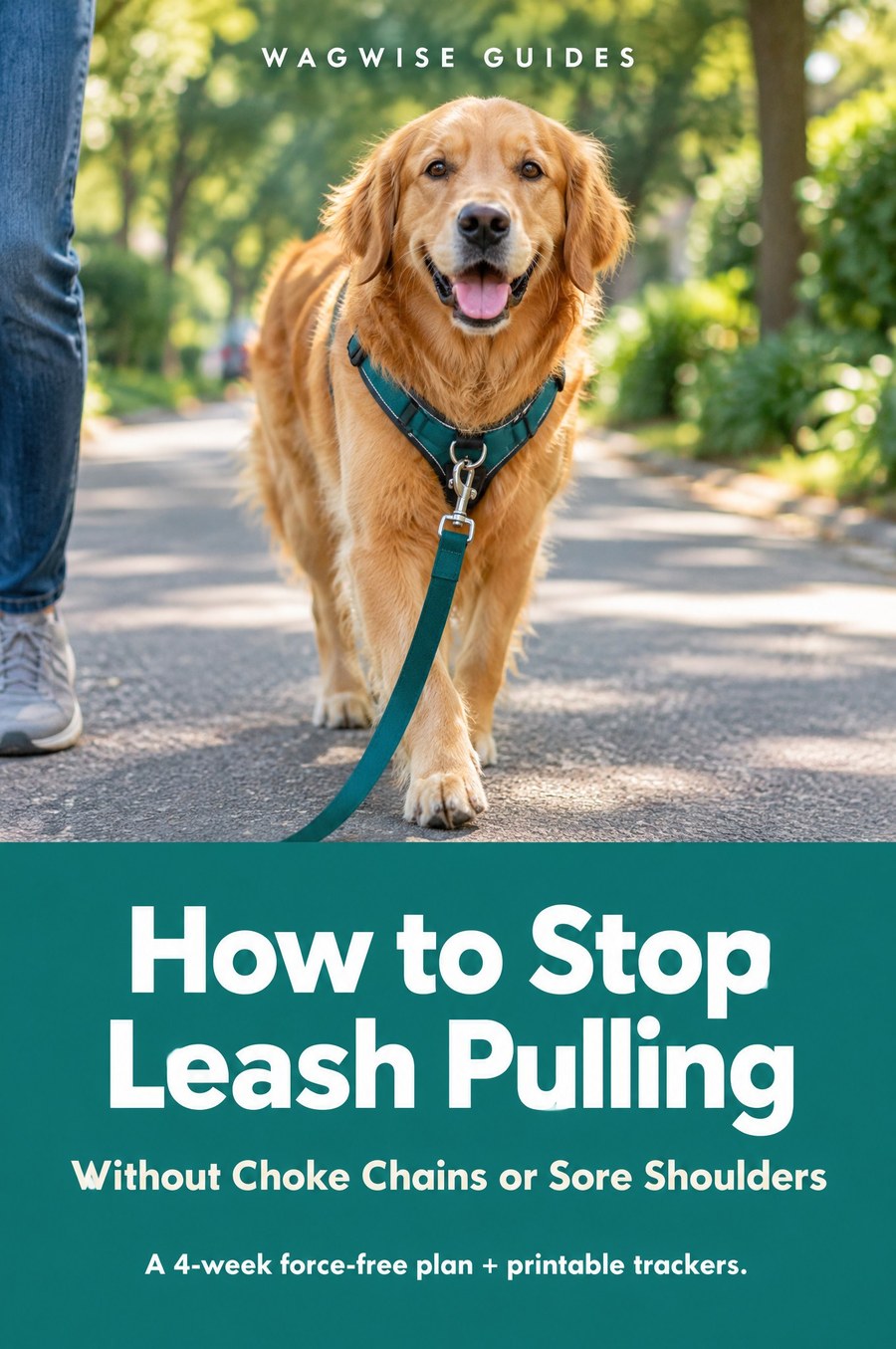
A young puppy will not walk perfectly. Aim for tiny wins: a glance back, a few loose steps, a happy return. If you want to understand the loop behind the pulling, read why dogs pull on the leash. When your puppy becomes a teenager and everything seems to fall apart, see Teenage Dog Pulling. The full plan is in the Stop Leash Pulling guide.
Frequently asked questions
Is it normal for a puppy to pull on the leash?
Yes. Dogs naturally walk faster than people and want to reach smells and sights, and young dogs find self-control hard.
When should I start leash training my puppy?
AKC says training can start when you bring your puppy home, even before full vaccination, indoors and in the yard. For outdoor walks before full vaccination, follow your vet.
What should I do if my puppy stops and won't walk?
Don't drag a puppy who stops. Wait, call happily and reward. If it is new, ongoing or looks like discomfort, check in with your vet.
Should I use a retractable leash for a puppy?
No. AKC and others advise against retractable leashes. Use a fixed, lightweight leash of about 5 to 6 feet.
More Wagwise guides for dog owners
 Stop Puppy BitingA gentle 4-week plan to stop the nipping and get through teething.$17 · instant PDFSee the guide →
 Get Rid of Dog Pee SmellRemove urine odor for good, then stop the accidents with a 14-day reset.$17 · instant PDFSee the guide →
 Stop Dog BarkingA quiz finds why your dog barks, then a plan made for that reason.$17 · instant PDFSee the guide →
 Help Your Itchy DogTrack triggers, soothe skin safely and know when to see the vet.$17 · instant PDFSee the guide →
 House-Train Your PuppyA kind 4-week plan with a schedule by age, a night plan and printable trackers.$17 · instant PDFSee the guide →
 Leave Your Dog AloneFilm, sort and build calm alone time with a vet-first plan and a step-by-step ladder.$17 · instant PDFSee the guide →
 Puppy Sleeps Through the NightA realistic, age-by-age plan for calmer nights, without cry-it-out or crate fights.$17 · instant PDFSee the guide →
 Less Dog Hair, Less SmellA 4-week brushing, bath and home routine for a calmer-smelling house.$17 · instant PDFSee the guide →
Want all four? Get the complete library for $49.
Sources
This article is general education, not veterinary advice. It does not replace an examination by your vet or help from a qualified behaviourist.